

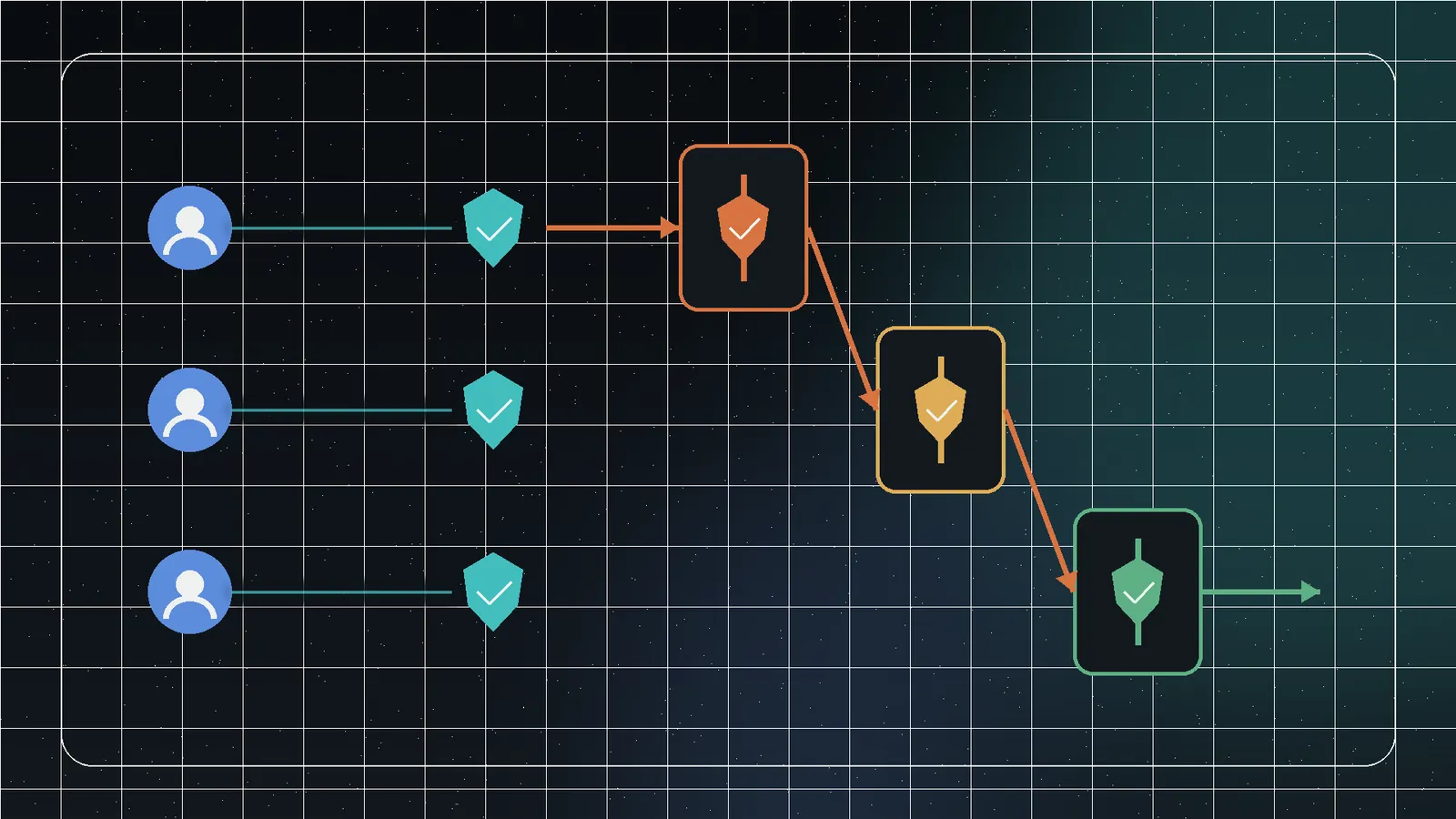
AI reduces production cost faster than accountability
A small team can draft, analyze, code, summarize, and package more work than its headcount suggests. It can also produce more fluent errors. Adding coordination roles may create meetings and status reports without improving evidence behind decisions.
One person owns the outcome. AI and specialists contribute. Gates require evidence. Escalation follows risk, not title.
Management and review are different
Management can allocate people, set priorities, coach, hire, and represent a unit. Review checks whether a specific artifact or action meets a standard. A small team may need little hierarchy and still require rigorous review.
The five gates
Problem, audience, authority, and success are clear.
Sources, inputs, assumptions, and uncertainty are adequate.
Technical, editorial, security, and functional checks pass.
An authorized human approves publication, payment, deployment, or access.
The change can be monitored, reversed, corrected, and learned from.
Assign one accountable owner
Every deliverable needs one owner who can explain the objective, inputs, authority, AI tools, independently checked claims, reviewer, and rollback. “The team” or “the model” cannot own an outcome.
Use AI at the right layer
| Work | AI role | Gate |
|---|---|---|
| Brainstorming | Generate options | Owner frames and selects |
| Drafting from sources | Structure and transform | Fact/source review |
| Code changes | Propose implementation | Tests, review, security |
| Customer messages | Draft/classify | Policy/tone approval when consequential |
| Publishing | Generate metadata/assets | Editorial and technical QC |
| Money, deletion, access | Prepare/recommend | Explicit authorized approval |
Review evidence, not fluency
Use source lists, diffs, tests, input/output samples, risk checklists, permissions, uncertainty, and rollback plans. A gate should be passable through evidence rather than persuasion.
Match depth to consequence
Owner review and basic checks.
Independent content/technical review.
Qualified specialist approval, strict permissions, logs, and rollback.
Give agents least privilege
Separate read, draft, recommend, and execute permissions. Require approval for external messages, publishing, code merge, infrastructure changes, deletion, payments, refunds, or access grants. Review gates are weak when agents can bypass them technically.
Escalate by condition, not hierarchy
- Source conflict or low confidence.
- New legal, security, financial, or reputational risk.
- Request outside documented authority.
- Failed test or unusual output.
- Irreversible action.
- Customer impact above threshold.
- Scope or budget change.
Bring in the relevant specialist at the gate without creating a permanent reporting chain over routine work.
Use a review packet
- Objective and audience.
- Artifact or diff.
- Sources and assumptions.
- AI tools/workflows used.
- Tests and QC.
- Known limitations.
- Requested decision.
- Rollback or correction plan.
Measure the gates
Track first-pass acceptance, escaped defects, severe errors, review latency, rework, and rollback time. Do not optimize only for fewer reviews; optimize for lower consequential error while preserving small-team speed.
Jivaro’s operating principle
Jivaro’s direction is small AI-assisted specialist teams without managerial roles as the default. That works only when ownership, standards, tooling, and review gates are explicit. Removing managers while leaving ambiguity merely pushes coordination failure to the founder or hidden informal authority.
Review-gate anti-patterns
- Rubber stamp: approval happens because a deadline is near.
- Reviewer without context: the person sees the final artifact but not sources, tests, or authority.
- Everyone approves: responsibility becomes diffuse.
- AI reviews AI: automated checks are treated as independent judgment.
- Gate after execution: irreversible actions occur before approval.
- No feedback loop: repeated defects never change templates, prompts, or tests.
Implement the model in one week
- Select one recurring consequential workflow.
- Name the accountable owner.
- Define three to five required evidence items.
- Identify the exact approval point and authorized reviewer.
- Separate draft and execute permissions.
- Define escalation triggers and rollback.
- Run three cases and revise the gate based on defects and delay.
Start with one high-value gate rather than designing a company-wide bureaucracy.
Frequently asked questions
No. Outcomes still need owners, priorities, standards, and escalation.
Material legal, financial, security, access, health, reputational, or irreversible actions.
A defined point where evidence and approval are required before work becomes more consequential.
Keep them risk-based, evidence-driven, asynchronous where possible, and assigned to the relevant specialist.
Sources and references
- AI Risk Management FrameworkNIST · reference
- Generative AI ProfileNIST · reference
- The AI-Native CompanyJivaro · first-party
- How to Evaluate AI Tools for BusinessJivaro · first-party